


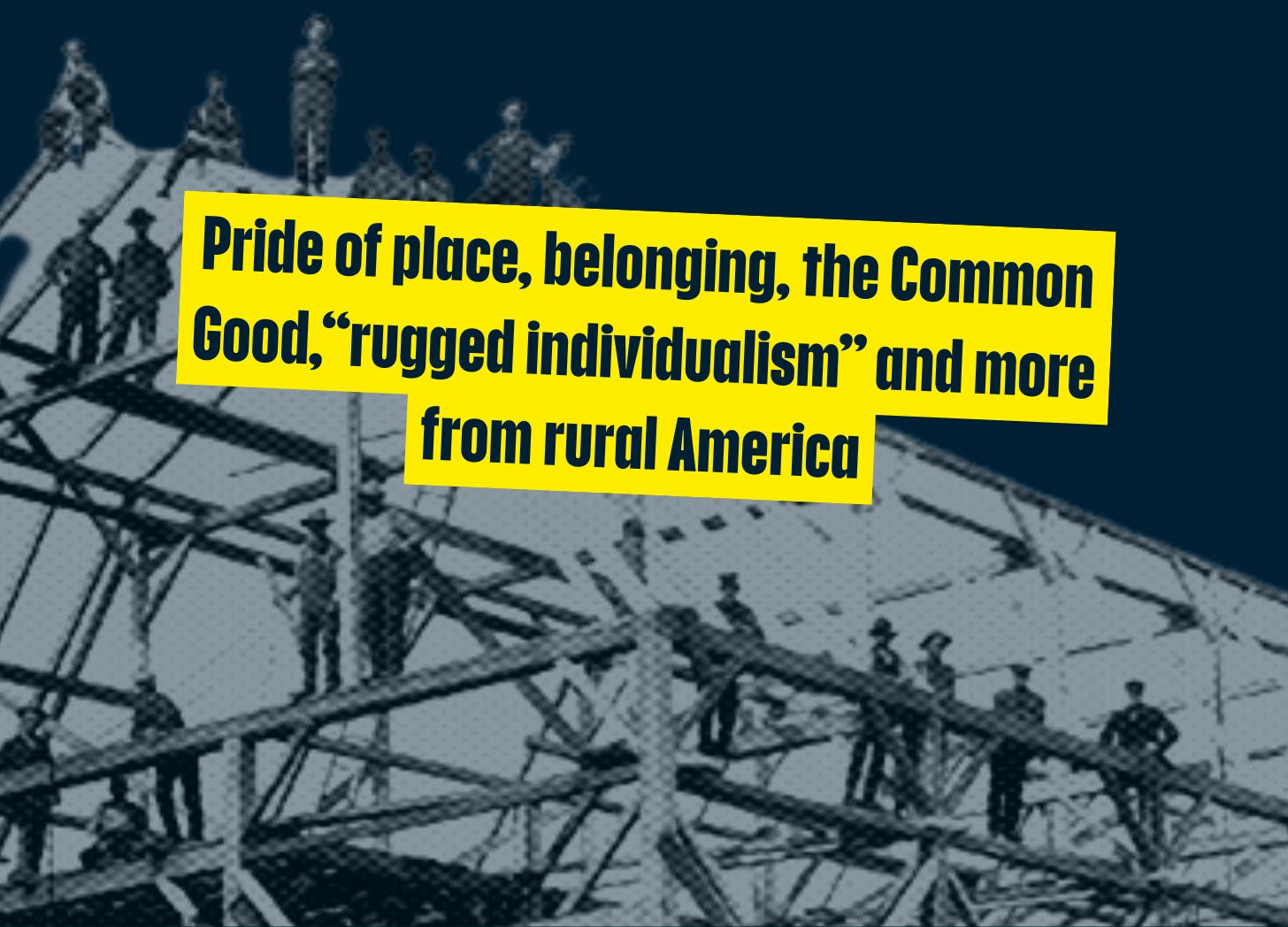
Hardly anywhere is the spirit of interdependence more alive than in a small town rebuilding after a storm. Yet, “rugged individualism” has been a moral identity projected onto rural America since the very beginning.
While the solidarity and resilience alive in a community bridge re-build is as real as the columns once holding it, the conditions that allow bridges to fall – and stay down –, while public dollars go unspent, speak less on the perseverance of rural grit, and more on a policy decision to leave people behind.
The truth is — “rugged individualism” has not stopped rural places and people from embracing a true sense of self-determination, both on a personal and community level. But it has excused decades of extraction, neglect and chronic divestment from rural America.
“Everyone deserves pride of place.” Jess Limbird, a Tennessee-native and longtime Alaska-resident on a homecoming journey back to the South, speaks with HomeGrown about the real issues that leave people “feeling stuck” in their hometowns. A mounting desire to rectify these conditions through local governance has been one key motivator for her down-ballot race in the town of Lewisburg this year.
Voice of Jess Limbird
Despite the phenomena of “brain drain” – and in active resistance to it – many of us are on a homecoming journey back to the land and people who’ve tended to it for generations, workers whose lifelong devotion to growing the food we eat, regenerating ecosystems, maintaining local economies, and building communities in every sense of the word, has often remained unshaken by shifting political landscapes and media-driven polarization.
Maria Hettel, a fourth-generation farmer returning to her family farm in Ohio, speaks of the joy of being welcomed by land tended to by her forefathers. And yet, as a Filipino-American, she yearns for community that can hold her cultural identity just the same.
Voice of Maria Hettel
She too, is on a journey of rebuilding civic ownership in her local community, alongside Michelle Higgs, who shares that returning to her hometown felt like putting on a perfectly-worn pair of jeans in the back of her closet, and started the Indiana Rural Summit to help revive local democracies across her home-state, and in turn build organizing infrastructure that prioritizes rural voices and choices.
Michelle shares the tension between a pervasive legacy of anti-government sentiment in rural communities, and the collectivism that once also embodied them – a shared chainsaw per holler, a rotating toolbox passed around in emergencies.
“Older generations remember,” she says.
Voice of Michelle Higgs
A mounting desire to reclaim pride of place through local leadership is the starting point for many Dirtroaders taking the charge to build a progressive working class in rural America – not only because it is our love for the places we call home that drives us, but because the very absence of the conditions that create pride of place so keenly represents the cycles we must work to break and reverse.
The road to rural revitalization, and a democratic revival in rural America, starts with a rejection of rugged individualism – reclaiming ownership over our shared destiny and the interwoven outcomes of our communities, because our youth deserve to see a future in the places they grew up, our elders deserve to age in the communities they’ve built, and the workers who’ve kept our country running deserve to live and rest with dignity.
–
Learn more about the HomeGrown storytelling cohort here, and Dirtroad Organizing below.
Dirtroad Organizing focuses on empowering the next generation of rural organizers, staff, and candidates via their network of 200+ rural leaders, with representation from 39 states. Through multiple election seasons and across party lines, these courageous organizers have had thousands of conversations with rural voters to help revive local democracies and understand what it takes to transform the possibilities of rural politics. Learn More